

Choosing the right concrete floor coating is one of the most important decisions a contractor makes before starting a flooring project. Epoxy, polyurea, and polyaspartic systems can all provide durable and attractive results, but they are not interchangeable.
The right choice depends on the condition of the concrete, installation environment, moisture, expected traffic, chemical exposure, UV exposure, and the customer’s requirements.
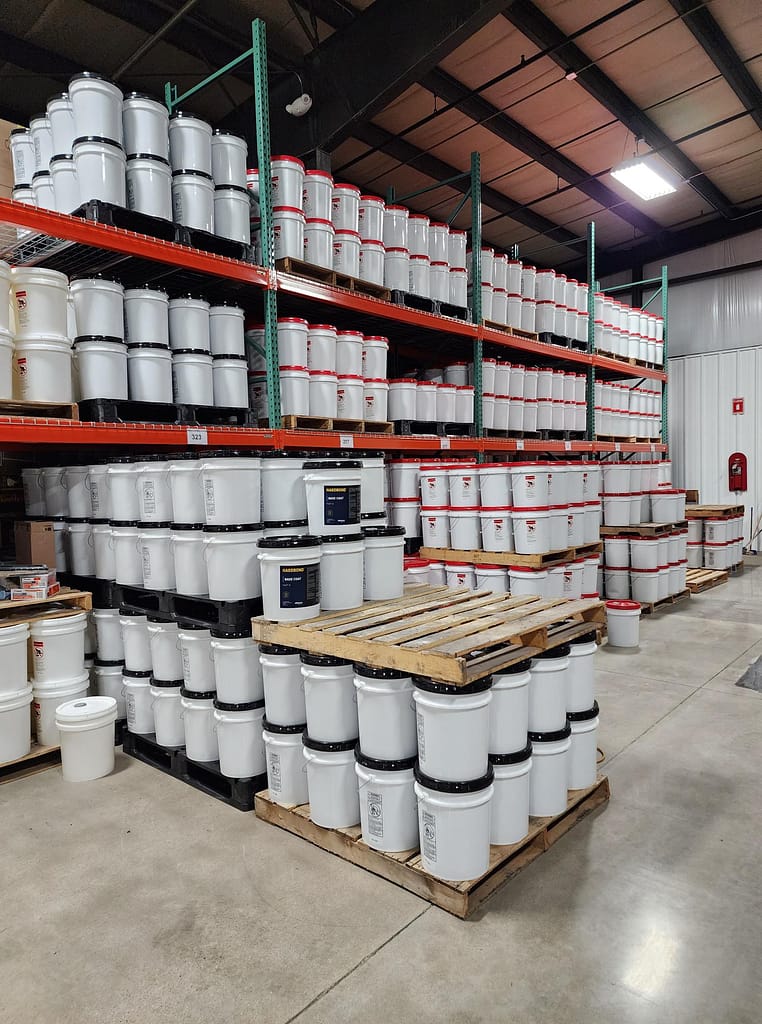
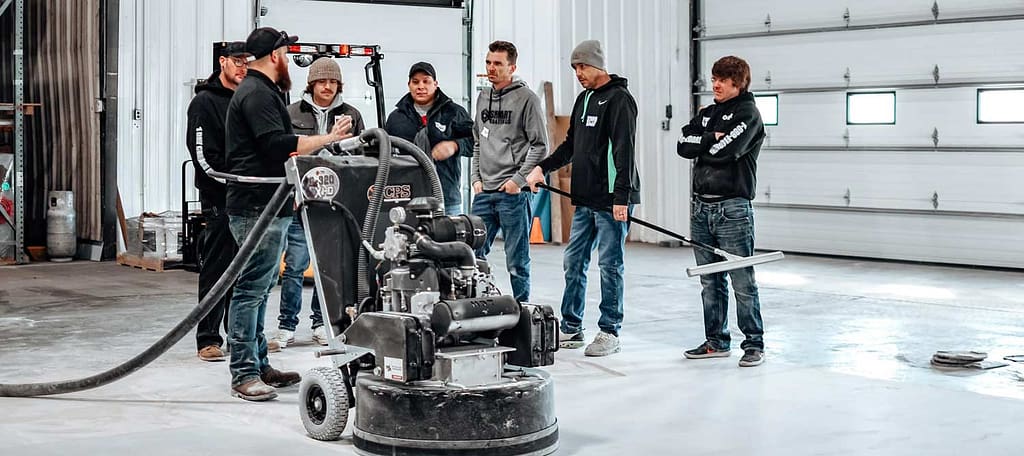
At AllSource Supply Inc., we work with concrete coating professionals who install flooring systems in garages, commercial facilities, warehouses, workshops, and other demanding environments. Understanding the differences between epoxy, polyurea, and polyaspartic coatings can help contractors select a system that fits the job rather than relying on a one-size-fits-all approach.
EPOXY, POLYUREA, AND POLYASPARTIC: WHAT’S THE DIFFERENCE?
Before comparing the three systems, it helps to understand their general purpose.
EPOXY FLOOR COATINGS
Epoxy has been widely used in concrete flooring for years because of its durability, adhesion, and versatility.
Epoxy can be used for:
- Residential garages
- Commercial floors
- Warehouses
- Workshops
- Decorative flooring
- Metallic epoxy systems
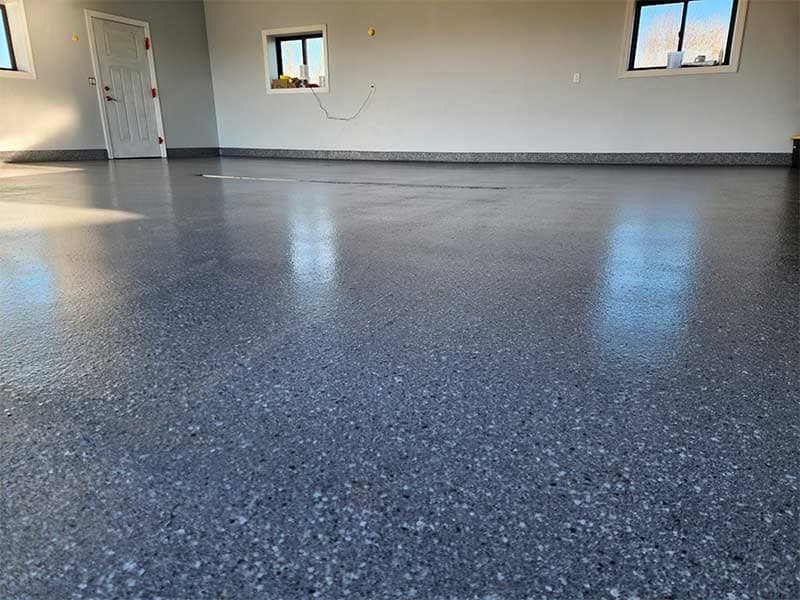
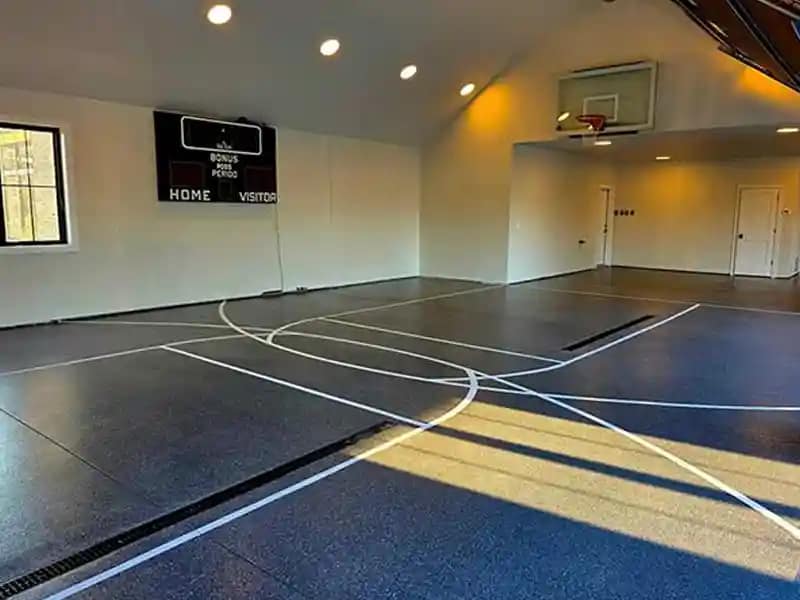
One of the biggest advantages of epoxy is its versatility in creating different finishes and decorative effects.
However, application conditions, cure time, moisture, and product specifications must be carefully considered before installation.
POLYUREA FLOOR COATINGS
Polyurea is commonly used in professional concrete coating systems where contractors need fast-curing materials and durable performance.
Depending on the formulation, polyurea can be used as part of multi-coat flooring systems and may provide benefits such as:
- Fast cure times
- Strong adhesion
- Abrasion resistance
- Durability
- Efficient installation
Because polyurea products can cure quickly, contractors need to understand the product’s working time and application requirements before beginning a project.
POLYASPARTIC FLOOR COATINGS
Polyaspartic coatings are often used as protective topcoats in concrete flooring systems.
Depending on the product formulation, polyaspartics can provide:
- Fast return-to-service
- UV stability
- Chemical resistance
- Abrasion resistance
- Durable protection
- Attractive finishes
Polyaspartic topcoats can be particularly useful when a project requires a durable protective layer and a relatively quick return to service.
AllSource Supply offers products such as Hardbond 3000 and Hardbond 4000 Polyaspartic Topcoats for professional concrete coating applications.
POLYUREA VS. POLYASPARTIC VS. EPOXY
So, which coating is best?
There isn’t one universal answer.
Instead, contractors should compare the characteristics of each system against the requirements of the project.
| Factor | Epoxy | Polyurea | Polyaspartic |
| Durability | Excellent | Excellent | Excellent |
| Cure speed | Varies | Generally fast | Generally fast |
| Decorative options | Excellent | Good | Good |
| UV resistance | Depends on formulation | Depends on formulation | Often strong |
| Return-to-service | Varies | Often fast | Often fast |
| Common use | Garages, commercial, decorative | Professional flooring systems | Protective topcoats |
Always check the manufacturer’s current technical documentation because performance and application requirements vary by product.
WHICH CONCRETE COATING IS BEST FOR GARAGE FLOORS?
Garage flooring has its own challenges.
Wisconsin garages, for example, may be exposed to:
- Road salt
- Snow and water
- Dirt and debris
- Hot tires
- Vehicle traffic
- Temperature changes
- Automotive fluids
A professionally designed garage flooring system may incorporate multiple layers rather than relying on one coating.
For example, a decorative flake system may include:
Prepared concrete → Base coat → Decorative flakes → Protective topcoat
The specific products should be selected according to the concrete condition, environmental conditions, and expected use.
Polyurea and polyaspartic products can be useful components of garage flooring systems, while epoxy can provide a durable and highly customizable base or decorative layer.
WHAT ABOUT COMMERCIAL AND INDUSTRIAL FLOORS?
Commercial and industrial environments can place much greater demands on concrete floors.
Before selecting a coating, contractors should consider:
- Forklift traffic
- Heavy equipment
- Chemical exposure
- Abrasion
- Impact
- Cleaning requirements
- Downtime
- UV exposure
A warehouse with forklifts, for example, has different requirements from a retail showroom.
For this reason, choosing a flooring system based only on the coating’s name isn’t enough.
MOISTURE CAN AFFECT YOUR COATING DECISION
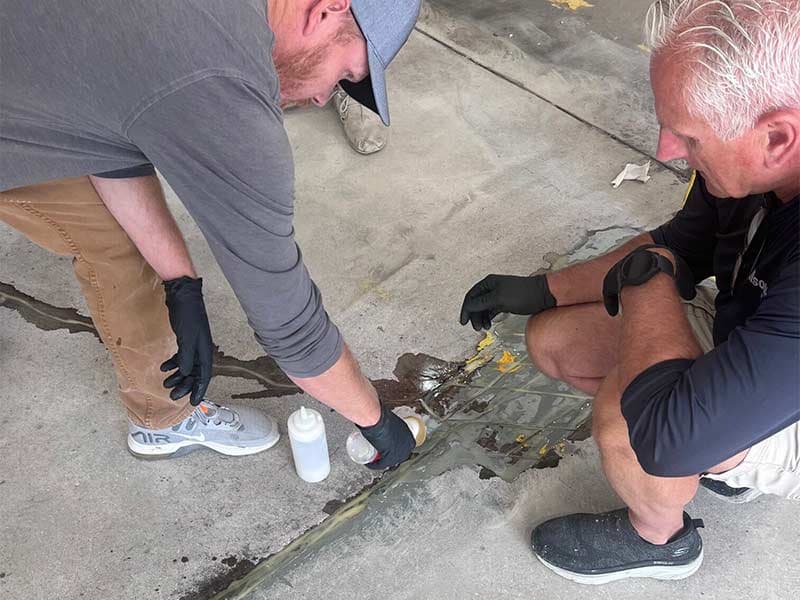
One of the most important steps before installing a concrete coating is evaluating moisture.
Concrete can appear completely dry while still containing moisture that may affect a coating system.
Excessive moisture can contribute to problems such as:
- Blistering
- Bubbling
- Peeling
- Delamination
- Adhesion failure
If moisture is a concern, don’t simply switch coatings without understanding the underlying condition. The project may require an appropriate moisture-management or mitigation approach.
For more information, see our Contractor’s Guide to Concrete Coating Surface Prep and Moisture Testing.
SURFACE PREPARATION STILL COMES FIRST
The best coating in the world cannot compensate for poor surface preparation.
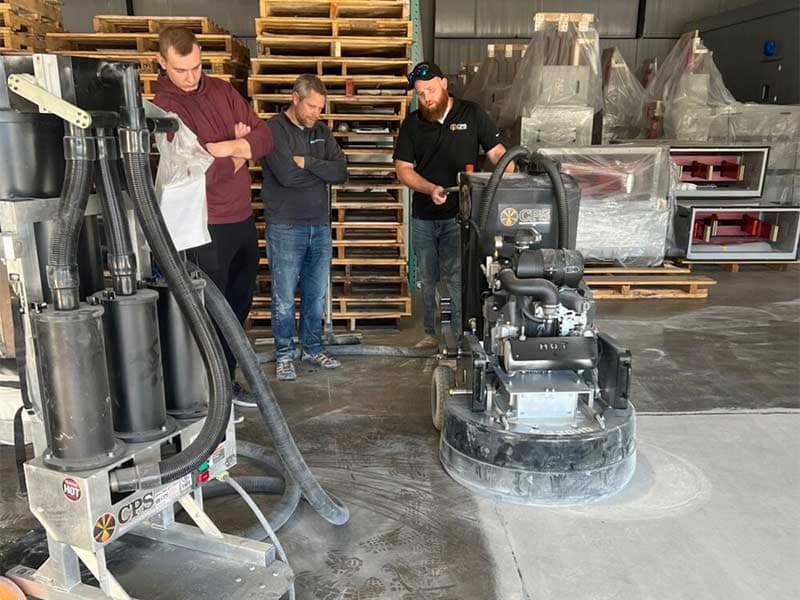
Before application, contractors should evaluate the concrete and determine whether it needs:
- Mechanical grinding
- Shot blasting
- Crack repair
- Removal of existing coatings
- Contaminant removal
- Dust removal
- Surface profiling
Proper preparation helps create the surface required for the coating system to perform as intended.
This is particularly important when installing fast-curing products because contractors may have less time to correct preparation or application problems once the material is mixed.
Never allow a fast installation schedule to replace proper preparation.
HOW TEMPERATURE AFFECTS COATING SELECTION
Temperature can influence how a coating behaves during installation.
Contractors should consider:
- Air temperature
- Concrete temperature
- Humidity
- Product temperature
- Working time
- Cure time
- Recoat window
This is especially important in climates such as Wisconsin, where jobsite conditions can vary considerably throughout the year.
Always follow the product’s technical data sheet for the required installation conditions.
HOW TO CHOOSE THE RIGHT CONCRETE COATING SYSTEM
Instead of asking which coating is universally “best,” use these five questions.
1. WHAT IS THE CONCRETE CONDITION?
Check for cracks, contamination, existing coatings, surface damage, and moisture.
2. HOW WILL THE FLOOR BE USED?
Determine whether the floor will experience vehicles, forklifts, heavy equipment, chemicals, or high foot traffic.
3. WHAT ENVIRONMENT WILL YOU BE INSTALLING IN?
Consider temperature, humidity, UV exposure, and ventilation.
4. HOW QUICKLY DOES THE FLOOR NEED TO RETURN TO SERVICE?
If downtime is critical, curing characteristics may become an important factor when comparing systems.
5. WHAT FINISH DOES THE CUSTOMER WANT?
The customer may want:
- Decorative flakes
- Solid color
- Metallic effects
- Glossy finish
- Functional industrial flooring
The desired appearance should be considered alongside performance requirements.
COMMON MISTAKES CONTRACTORS SHOULD AVOID
Choosing Based Only on Price
The least expensive product isn’t necessarily the most cost-effective option.
A flooring system that fails prematurely can result in callbacks, repairs, labor costs, and unhappy customers.
Choosing Based Only on Cure Time
Fast cure times can improve productivity, but the product still needs to be appropriate for the concrete and jobsite.
Skipping Moisture Testing
A floor that looks dry isn’t necessarily ready for coating.
Rushing Surface Preparation
Preparation is the foundation of the entire flooring system.
Ignoring Product Documentation
Every product has specific requirements. Contractors should review the current technical data sheet before installation.
THE BEST CONCRETE COATING IS THE RIGHT SYSTEM FOR THE JOB
Epoxy, polyurea, and polyaspartic coatings each have a place in professional concrete flooring.
Epoxy can offer excellent versatility and decorative possibilities. Polyurea can provide fast-curing performance for professional flooring systems. Polyaspartic products can provide durable, UV-stable protection and efficient return-to-service when the formulation is appropriate.
But successful flooring isn’t simply about choosing one coating over another.
It’s about selecting the right complete system for the concrete, environment, application, and customer.
At AllSource Supply Inc., we help concrete coating professionals with products, equipment’s and knowledge needed to approach projects with confidence.
From surface preparation equipment and concrete repair products to epoxy, polyurea, polyaspartic, decorative flakes, and application supplies, having the right materials is only part of the equation. Understanding how to use them is just as important.
NEED HELP CHOOSING A CONCRETE COATING SYSTEM?
Planning your next concrete flooring project?
Call AllSource Supply Inc. at 833-663-4255 to discuss your product, equipment, and concrete coating needs.
The right coating starts with the right preparation—and the right system starts with understanding the job.
I